
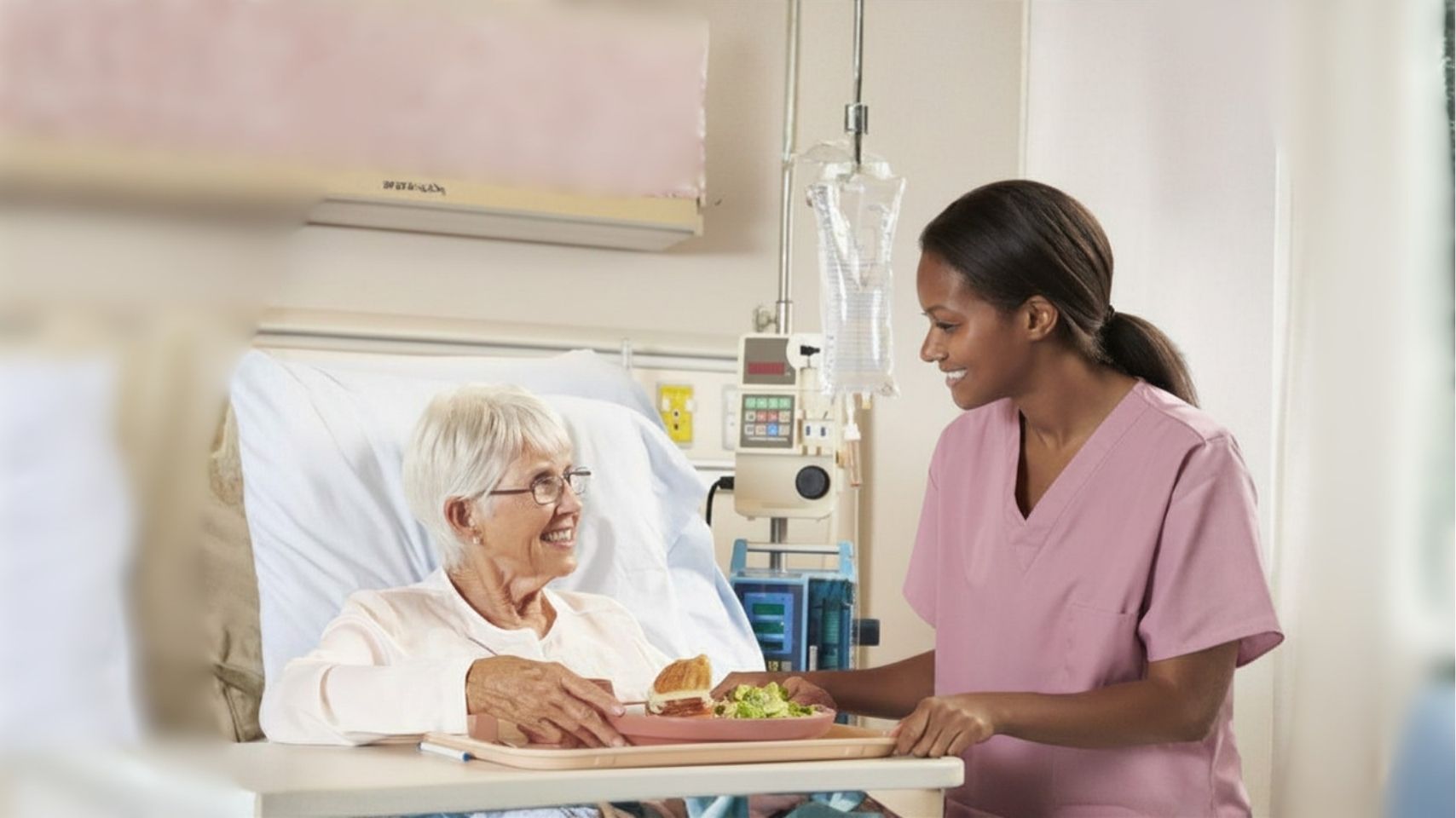

Introduction: nutrition is a key part of care
In hospitals, care homes and clinics, food is not only logistics. It is part of daily care and quality of life. Appropriate nutrition can support recovery, reduce avoidable complications and help teams adapt meals to people’s actual needs.
Yet many facilities still have no simple, daily measurement of what patients and residents eat. Monitoring often depends on visual observation or manually completed forms. This is where artificial intelligence can help.
1. Why is nutrition difficult to monitor every day?
Several structural factors make intake monitoring difficult:
- meals are taken in different places, from bedrooms to dining rooms;
- trays contain several components, including starters, mains, desserts and supplements;
- teams have limited time to observe every plate;
- appetite and intake vary from one day to the next.
The result is that food-service and care decisions may be made with incomplete information, or after a pattern has already become established.
2. Visual AI supporting meal monitoring
AI can analyse before-and-after images of a meal tray and help estimate what was consumed.
The workflow is straightforward:
- a tablet or smartphone captures the served tray;
- a second image can be captured after the meal;
- the system compares the images, recognises dishes and estimates leftovers;
- the results can be connected to menu and nutrition information.
This approach is designed to fit existing meal service practices. It supports professionals; it does not replace dietitians, clinicians or care teams.
3. Benefits for care and nutrition teams
AI-assisted meal monitoring can provide:
- less manual transcription;
- a clearer review point for dietitians;
- earlier visibility of repeated low intake;
- better dialogue between kitchen and care teams;
- structured data for menu, texture and portion adjustments.
Nutrition becomes easier to review over time instead of remaining a series of isolated observations.
4. Clinical, economic and environmental questions
Food waste and low intake can coexist. A dish that is repeatedly left may indicate a preference, a portion issue, a texture mismatch or another operational problem. A useful meal-data workflow helps teams ask the right question before changing a service.
With a platform such as Skeal, teams can review consumption and leftovers by dish, meal, unit and period, then measure the effect of an adjustment.
5. AI and person-centred care
Used responsibly, AI can strengthen:
- respect for a patient’s or resident’s food preferences;
- review of repeated low intake by qualified professionals;
- transparency between care, kitchen and family conversations;
- traceability of the changes made to a meal service.
The objective is not to replace human judgement, but to give teams more useful evidence and more time to act.
Conclusion: make nutrition measurable and usable
The technology is becoming practical, but the operating model matters just as much. Healthcare facilities need tools that fit the reality of meal service, protect sensitive data and keep professionals in control.
Skeal turns before-and-after meal photos into structured information about intake, nutrition and food waste. It helps teams move from assumptions to a clearer, more actionable view of what is actually consumed.
Contact us to discuss a pilot in your organisation.
#AI #healthcare #nutrition #foodservice #seniorliving #foodwaste