
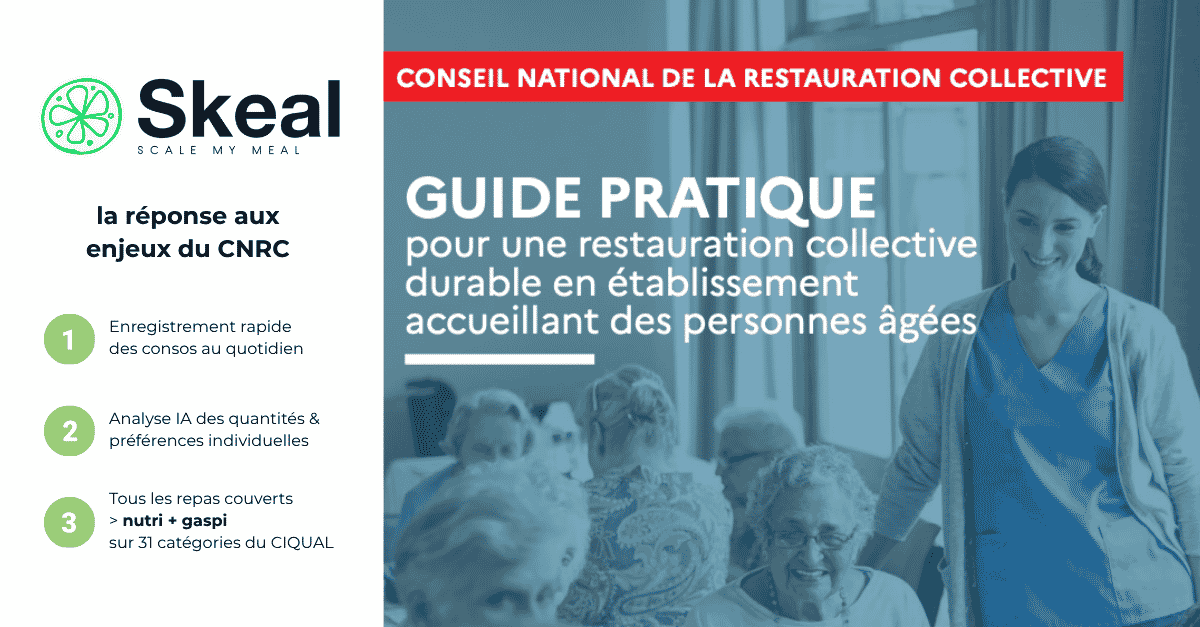

In May 2026, the French National Council for Collective Catering (CNRC) published a practical guide on sustainable food service in facilities welcoming older people.
The guide addresses a central challenge for care homes: how can they improve meals, reduce undernutrition and limit food waste without setting these objectives against one another? Its answer is clear: the issues need to be addressed together.
Food waste remains high in care homes
According to the figures cited in the guide, food waste can reach 117 to 134 grams per resident and per meal. More than half of this waste may come directly from returned plates.
The key question is therefore not only what the kitchen produces, but what residents actually eat.
Reduce waste without reducing nutrition
Reducing the quantities served is not an acceptable answer when residents already face a risk of undernutrition, unless the nutritional density of the meal is also considered.
Older people continue to have significant nutritional needs, particularly for protein. Facilities need to understand why certain dishes are not eaten instead of reducing portions systematically.
Food waste can become an indicator of service quality, satisfaction and how well meals match residents’ needs and preferences. Measuring individual food preferences is an important link between reducing waste and improving nutrition.
Objective data is still needed
The CNRC guide recommends:
- regular observation of food intake;
- identification of the causes of waste;
- adapting menus to residents’ preferences;
- monitoring undernutrition risks.
In many facilities, however, these data are still collected manually, occasionally and subjectively. That limits the ability of teams to act quickly.
Why measuring intake changes the conversation
When a facility knows which dishes are eaten, refused or left, which residents are eating too little and which foods create the most waste, teams can act more precisely.
Food-service teams can adapt recipes. Dietitians can review situations earlier. Management can measure the real effect of operational changes.
Toward more sustainable and more personal food service
Sustainable food service in care homes is not only about buying more sustainable or organic products. It also depends on whether served meals actually meet residents’ needs and preferences.
Measuring actual consumption helps connect three goals:
- improve residents’ nutritional intake;
- reduce food waste;
- optimise food-service costs.
The CNRC guide confirms a broader shift: food data is becoming an important management tool for facilities welcoming older people.
Skeal: turning recommendations into action
The guide confirms that reducing food waste cannot be separated from nutrition, resident satisfaction and service quality. Facilities need objective information about what is actually consumed, enjoyed or left on the plate.
Skeal automates the measurement of meal intake and waste from simple before-and-after photos. The platform helps food-service, nutrition and management teams review nutrition quality, satisfaction, economic performance and environmental impact in one workflow.
More than a reporting tool, Skeal is designed to turn each meal into usable data and each insight into a practical improvement action.
Discover Skeal: AI-assisted measurement for collective food service.
Source: French National Council for Collective Catering (CNRC), *Sustainable food service in facilities welcoming older people*.