
Introduction
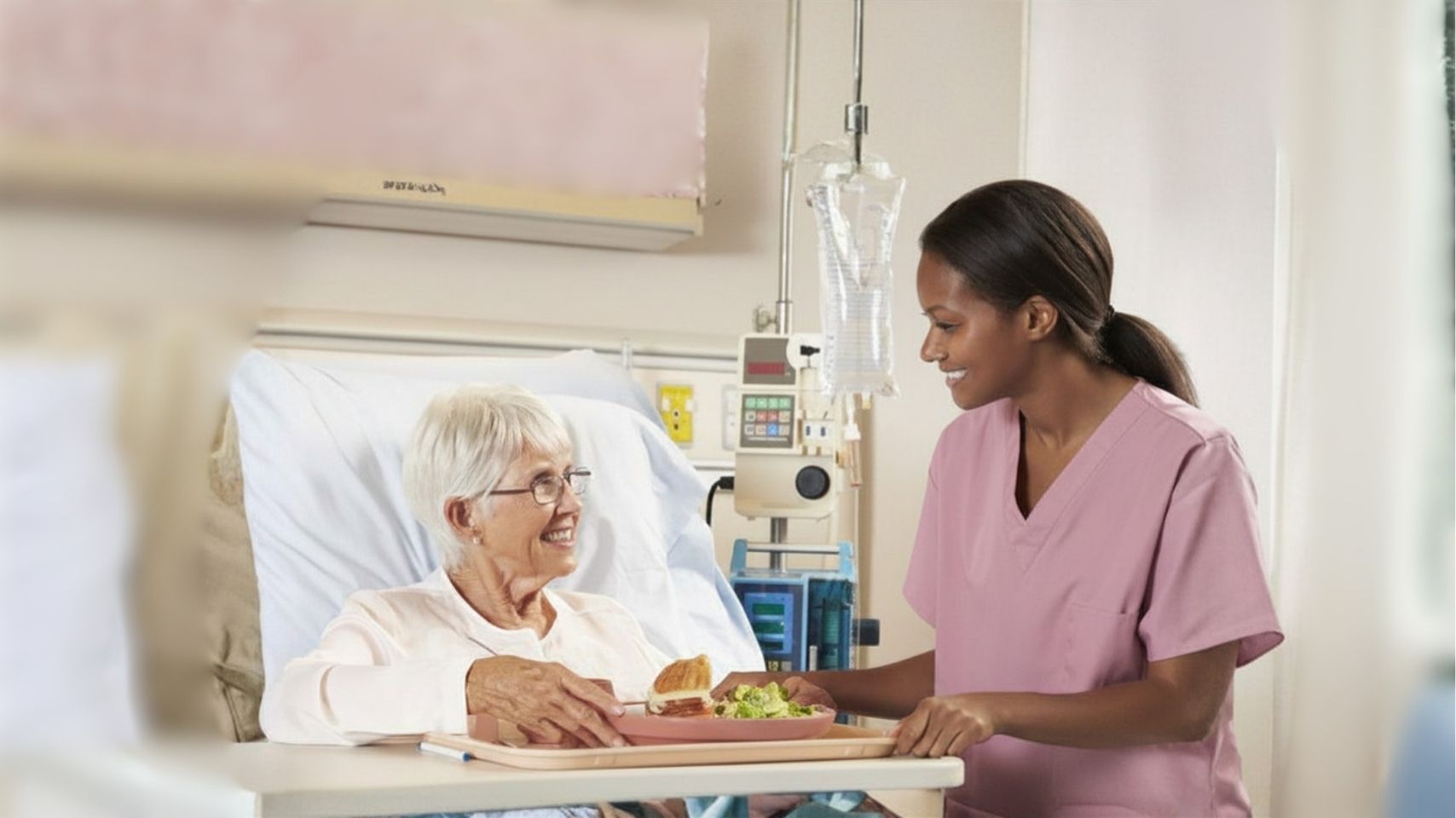
In hospitals, care homes and senior living facilities, meals are part of care, routine and quality of life.
Yet two structural issues often remain connected but difficult to see:
- Food waste, which is frequently invisible until it is weighed.
- Low food intake, which may be noticed too late.
Without a reliable view of what was served, eaten, refused or left on the plate, teams have to make decisions from partial observations. Could AI help make this daily reality visible?
1. Why so much food is left uneaten
Studies from different healthcare settings report that a substantial share of meals served is not consumed. The reasons are operational and human:
- portions that do not match appetite;
- menus that are poorly accepted;
- textures or diets that are not suitable;
- patients or residents eating very little;
- errors or changes in meal prescriptions.
Waste is therefore not only a kitchen issue. It can also be a signal that the meal service and the person’s needs are not aligned.
2. Low intake can remain hidden
When teams do not observe intake consistently, the first signs of a problem may only appear after weight loss, a clinical event or a repeated refusal of meals.
Paper forms and occasional observations are useful intentions, but they are difficult to consolidate across residents, patients, units and days. What is not measured consistently cannot be compared or acted on with confidence.
3. Why actual consumption is hard to track
In many facilities, meal monitoring still relies on:
- subjective visual observations;
- paper sheets completed after the service;
- spreadsheets maintained irregularly;
- occasional weighing campaigns.
The result is limited traceability, little dish-level detail and no simple way to connect consumption with menus, portions or nutrition workflows.
4. Skeal: measure, understand and act
Skeal uses simple before-and-after meal photos to help teams:
- recognize the dishes served;
- identify leftovers and estimate the amount consumed;
- connect meal data with the available nutrition information;
- identify dishes that are frequently left;
- give care, nutrition and food-service teams a shared operational view.
The workflow is designed to fit existing meal service practices, without replacing clinical judgement or the work of dietitians and care teams.
5. What teams can improve
With more regular and structured data, facilities can work on:
| Area | Possible use of the data |
| --- | --- |
| Food waste | Identify dishes, portions or services that generate avoidable leftovers |
| Meal satisfaction | Compare acceptance by dish, unit and period |
| Nutrition monitoring | Spot repeated low intake for professional review |
| Food cost | Adjust purchasing, recipes and portions using observed consumption |
| Continuous improvement | Measure whether an operational change is actually helping |
The goal is not to automate decisions. It is to give teams better evidence for the decisions they already need to make.
6. Food service data is a care and performance lever
Healthcare teams often have to balance nutrition, satisfaction, cost and environmental responsibility at the same time. Measuring actual meal consumption helps connect these priorities instead of treating them as separate projects.
When teams can see what is eaten and what is left, they can test changes to menus, portions and textures, then review the effect over time.
Conclusion: make the invisible visible
Skeal helps facilities turn meal photos into structured information about consumption, nutrition and food waste.
The platform does not replace care professionals. It gives them a clearer operational starting point for reviewing meals, adapting service and reducing avoidable waste.
Want to know more?
Contact us to discuss a pilot in your facility.